Tanzania’s election unrest rooted in years of repression, Amnesty says
 October 31, 2025
3 min read
October 31, 2025
3 min read
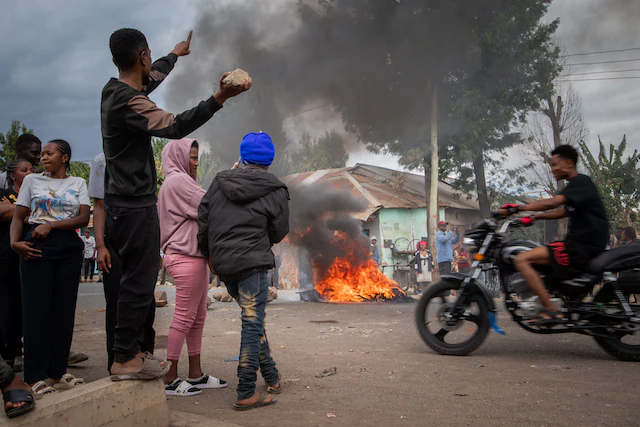
People protest in the streets of Arusha, Tanzania, on election day Wednesday, Oct. 29, 2025. (AP Photo/str) (Uncredited/AP)
The unrest that has marred Tanzania’s elections is the result of years of pent-up public anger over state violence, abductions and the systematic erosion of democracy, a leading human rights expert said, as the military warned it would stamp out further protests.
Chaos erupted on Wednesday as voters went to the polls, with protesters marching through the streets, tearing down posters of President Samia Suluhu Hassan and attacking police and polling stations. The government responded with an internet shutdown and a curfew.
In an interview, Roland Ebole, Amnesty International’s researcher for East Africa, said the outbreak was the inevitable result of a long-running campaign of repression.
“People were not expecting Tanzania to get to this level,” Ebole said. “But when you push people, when opposition candidates are either in prison or banned from participating, when people are abducted left, right and centre with no kind of accountability… people have been cornered for so long, and at some point they had to retaliate.”
The authorities have taken a hard line. Defence forces chief General Jacob Mkunda appeared on state television on Thursday to label the protesters “criminals” and said the army had “controlled the situation.”
A “Wave of Terror”
Ebole argued that while former President John Magufuli was also autocratic, the nature of the repression under President Samia has shifted, creating a new level of fear and anger.
“This wave of terror is different from the lawfare that Magufuli applied,” Ebole said. “Suluhu is literally applying terror inside and out: abductions, killings, sexual violence, harassment. The security forces are torturing dissenters. It’s a new phenomenon.”
He said the anger is widespread, affecting not just the opposition but also members of the ruling Chama Cha Mapinduzi (CCM) party and ordinary citizens.
“The violations we have seen have even targeted a TikToker and an ambassador who criticised the state and went missing without any form of accountability or justice,” Ebole said.
At the centre of these allegations, he noted, is the president’s son, Abdul Halim Hafidh Ameir.
“People have argued that he is behind most of the atrocities that we are witnessing in the country and doing it on behalf of the mother,” Ebole said. “And this could be something that is really angering other members of the CCM.”
Military’s Role Unclear
The ongoing communications blackout has made it difficult to assess the full situation on the ground. Ebole described the environment as “confusing” and said the role of the military, a key institution in times of political transition, remains critical to watch.
“The army has been very instrumental, even during Magufuli’s death, in keeping order when a transfer of power is concerned,” he said. “This time around, we are waiting to see what its role will be.”
With tensions high both inside and outside the ruling party, he concluded, the country is in a precarious position. “How this plays out, how this turns out, I think we wait to see.”

Related Articles