
Reprieve for victims of wildlife attack as State disburses HWC in Meru
 May 26, 2025
2 min read
May 26, 2025
2 min read
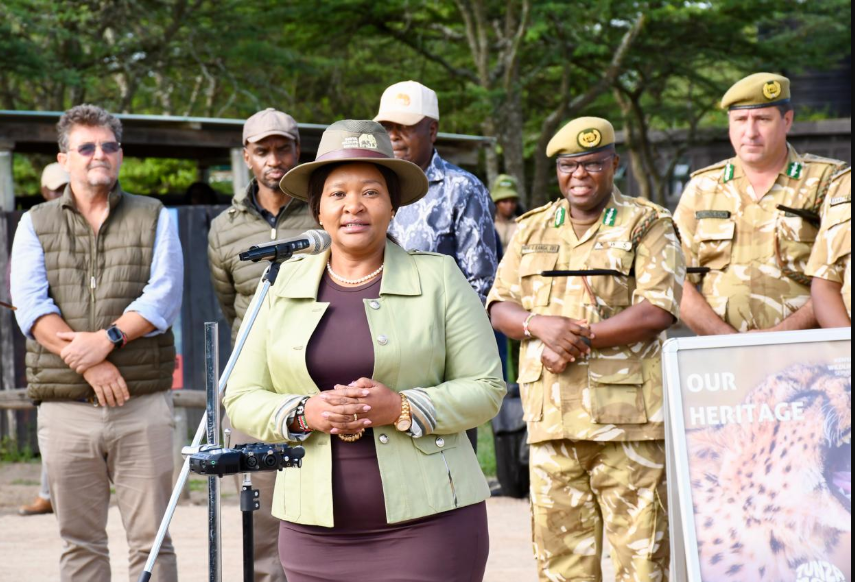
Cabinet Secretary for Tourism Rebecca Miano/https://x.com/rebecca_miano
In a significant stride toward easing tensions between wildlife and communities, the Kenya has disbursed the third phase of human-wildlife conflict (HWC) compensation cheques in Murera, Meru County.
The initiative underscores the state’s deepening commitment to address the often-devastating impact of wildlife on local livelihoods.
The event, graced by President William Ruto, saw affected families compensated for deaths, injuries, crop destruction, and livestock predation caused by wild animals. The occasion also marked a renewed national dialogue on the future of conservation, centered on coexistence rather than confrontation.
Erustus Kanga, Director General of the Kenya Wildlife Service (KWS), offered a sobering update on the scale of the problem.
“Between January and March 2025, our teams managed 3,857 incidents of human-wildlife conflict,” he said. “Tragically, this included 40 human deaths and 77 serious injuries. We also responded to 1,532 crop damage cases and 632 livestock predation incidents.”
He emphasized that while compensation is necessary, prevention must be the ultimate goal.
“We conduct thousands of problem-animal control patrols and stakeholder meetings, but more important
ly, we are investing in deterrence, fences, lights, bomas, and water pans for both people and wildlife,” Prof. Kanga noted. “This is about innovation, planning, and partnership.”
Kanga highlighted ongoing community outreach efforts, including 237 community conservation education sessions and deployment of a specialized Problem Animal Management Unit. These efforts, he said, represent a shift from reactive to proactive conservation.
Cabinet Secretary for Tourism and Wildlife, Rebecca Miano, stressed on the government’s responsiveness to long-standing claims.
“As of February 2023, outstanding approved claims stood at over KSh 4.16 billion,” she said. “To date, KSh 2.8 billion has been paid out, leaving a balance of KSh 1.36 billion, with some cases dating back to 2014.”
Miano also detailed physical interventions already underway.
“We have constructed over 200 kilometers of electric fencing and installed beehive barriers in high-risk zones,” she said. “Today, local communities are now at the center of conservation efforts, with training, conservancy growth, and direct support.The initiative falls under the broader National Human-Wildlife Coexistence Strategy, which supports alternative livelihoods like beekeeping and fish farming. These projects not only reduce pressure on natural resources but also help families build resilient incomes.

Related Articles
